


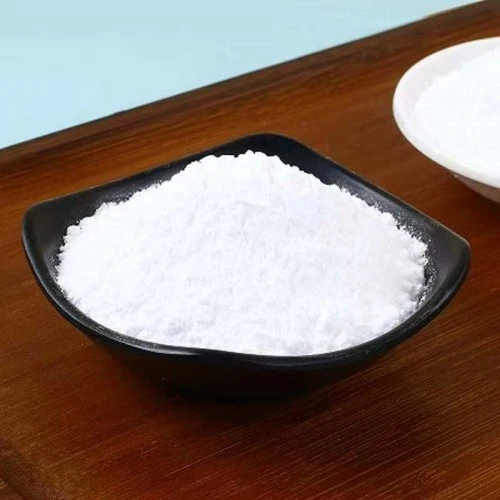
Mirodenafil Hydrochloride is a selective phosphodiesterase type 5 (PDE5) inhibitor active pharmaceutical ingredient (API) supplied for the formulation and commercial manufacturing of male health oral solid dosage forms.
Key Specifications
|
Parameter |
Specification Standard |
Analytical Method / Condition |
|
Assay & Purity |
≥ 99.0% |
HPLC, dried basis |
|
Chiral Purity |
≥ 99.5% |
Enantiomeric separation |
|
Water Content |
≤ 1.0% |
Karl Fischer titration |
|
Single Impurity |
≤ 0.05% |
UPLC peak integration |
|
Total Impurities |
≤ 0.15% |
UPLC aggregate profiling |
|
Residual Solvents |
ICH Q3C compliant |
Headspace GC-MS |
|
Appearance |
White to off-white crystalline powder |
Visual inspection |
|
Melting Point |
235°C to 240°C |
Capillary thermal analysis |
|
Particle Size (D90) |
< 15 μm |
Laser diffraction, jet-milled |
|
Particle Size (D50) |
< 5 μm |
Laser diffraction, jet-milled |
Chemical & Functional Profile
Structural Properties
• Molecular Formula: C26H37N5O5S · 2HCl
• Molecular Weight: 604.59 g/mol
• CAS Registry Number: 862189-96-6
Mechanism of Action
• Target Selectivity: Selectively inhibits cGMP-specific phosphodiesterase type 5 (PDE5) in cavernous smooth muscle tissues.
• Hemodynamic Pathway: Facilitates endogenous nitric oxide signaling to promote smooth muscle relaxation and local blood flow.
Solubility Characteristics
• Aqueous Profile: Freely soluble in acidic media, with solubility of ≥ 50 mg/mL at pH 1.2.
• Organic Profile: Moderately soluble in methanol and practically insoluble in non-polar organic solvents.
Product-Specific Technical Focus
Polymorphic Stability: Maintains a controlled crystal phase across commercial manufacturing batches through optimized crystallization and solvent-processing conditions.
Moisture Mitigation: Controlled vacuum thermal drying at temperatures ≤ 40°C is used to minimize surface moisture adsorption.
Intermediate Purge: Multi-stage recrystallization is used to reduce trace process-related impurities.
Metal Scavenging: Resin-based filtration is used to control residual palladium and nickel catalyst levels to below 1 ppm.
Formulation & Development Considerations
Binder Interaction: Demonstrates chemical stability when processed with commonly used excipients such as microcrystalline cellulose, lactose monohydrate, and croscarmellose sodium.
Degradation Control: Designed for stable handling under standard ambient processing conditions.
Powder Flowability: Typical Carr's Index is controlled within the range of 15% to 20% to support downstream powder processing.
In-Vitro Release: Micronized grades can achieve more than 85% active dissolution within 15 minutes in simulated gastric fluid at pH 1.2, subject to formulation and test conditions.
Typical Applications
Core Tablets: Suitable for direct compression and wet granulation development for oral tablet formulations.
Orally Disintegrating Films: Fine particle grades can be evaluated for rapid dispersion applications where particle size and mouthfeel are critical formulation parameters.
Reference Standards: Qualified material can be supplied for in-vitro permeability studies, analytical method development, and comparative dissolution testing.
Quality Control & Analytical Verification
Testing Protocol: Analytical testing can include validated UPLC methods with photodiode array detection and mass spectrometric confirmation where required.
Scope: A lot-specific Certificate of Analysis (CoA) can be provided covering identity, assay, water content, residual solvents, and impurity profiles.
Protocol: Stability evaluation can be conducted under long-term and accelerated conditions in accordance with applicable ICH guidelines.
Documentation & Compliance Support
DMF Support: Regulatory and technical documentation can be provided to support customer registration and submission requirements, subject to product and market requirements.
Compliance Statements: TSE/BSE statements, elemental impurity information, and other compliance documents can be supplied upon request.
Traceability: Raw material and production records can be maintained to support traceability from manufacturing through final packaging.
Storage Parameters
Recommended Storage: Store according to the product-specific stability and packaging requirements.
Temperature Control: Avoid prolonged exposure to excessive heat during storage and transportation.
Sealed Integrity: Keep the material in its original sealed packaging and protect it from light, moisture, and contamination.
Packaging & Logistics
Liner Specifications: Double polyethylene liners can be used to provide additional protection against moisture and contamination.
Outer Protection: Rigid fiber drums or other suitable pharmaceutical-grade outer packaging can be used according to order requirements.
Standard Sizes: 1 kg, 5 kg, and 25 kg packaging configurations can be available depending on customer requirements.
Shipping Conditions: Transportation conditions are selected according to product stability requirements, destination regulations, and agreed customer specifications.
FAQ
Q: What is the typical batch size available for commercial orders?
A: Commercial production quantities can be discussed according to customer requirements, with pilot and evaluation quantities available for formulation development and process validation.
Q: Does the powder require micronization prior to tableting?
A: Micronized grades can be supplied where particle-size control is required. The appropriate grade depends on the customer's formulation, dosage form, and processing requirements.
Q: What regulatory documentation accompanies each delivery?
A: Typical documentation may include a Certificate of Analysis, Certificate of Origin, TSE/BSE statement, and relevant lot-specific analytical documentation, subject to customer and market requirements.
Q: Are working reference standards provided?
A: Qualified secondary reference standards may be available upon request for analytical method development, quality control, and comparative testing.
Hot Tags: mirodenafil hydrochloride, China mirodenafil hydrochloride manufacturers, suppliers, factory, Avanafil Impurity A, sildenafil method validation standard, Sildenafil Powder, testosterone enanthate raw material powder, testosterone propionate pharmaceutical ingredient, Vardenafil Pharmaceutical Building Block


