


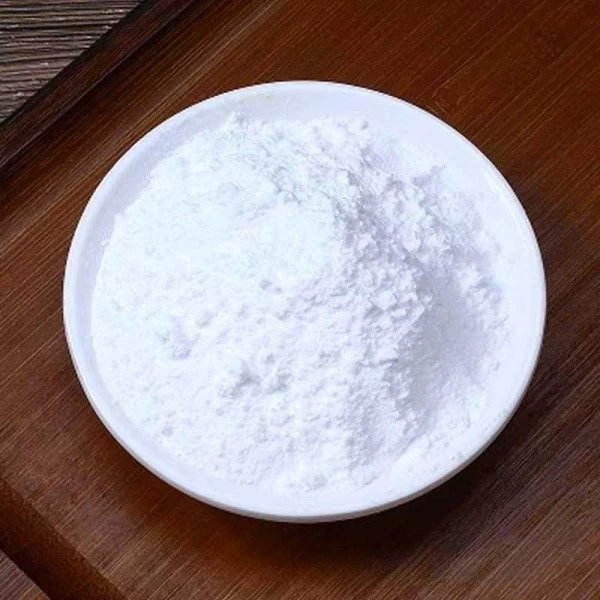
Sulfadimethoxine is a long-acting sulfonamide antimicrobial agent that competitively inhibits bacterial dihydropteroate synthase, disrupting folic acid synthesis and inhibiting the proliferation of susceptible pathogens. It is supplied as a pharmaceutical-grade active ingredient for veterinary pharmaceutical manufacturing.
Key Specifications
|
Parameter |
Technical Specification |
Test Method / Reference |
|
Assay (Dried Basis) |
99.0% to 101.0% |
Titration / HPLC |
|
Appearance |
White or almost white crystalline powder |
Visual Inspection |
|
Melting Range |
197°C to 200°C, with decomposition |
Capillary Method |
|
Loss on Drying |
Maximum 0.5% |
105°C, 3 Hours |
|
Residue on Ignition |
Maximum 0.1% |
Pharmacopeial Procedure |
Chemical & Pharmacological Profile
CAS Registry Number: 122-11-2
Molecular Formula: C12H14N4O4S
Molecular Weight: 310.33 g/mol
Mechanism of Action: Competitive inhibition of bacterial folate synthesis by interfering with the utilization of para-aminobenzoic acid, providing broad-spectrum bacteriostatic activity against susceptible Gram-positive and Gram-negative bacteria.
Product-Specific Technical Focus
Particle Size Distribution: Micronized grades are available with a D90 value below 15 micrometers to support improved suspension characteristics and dissolution performance in liquid formulations.
Residual Solvents: Residual solvents are controlled in accordance with applicable ICH Q3C requirements. Production processes can utilize ethanol and purified water, with controls in place to minimize residual solvent levels.
Polymorphic Form: The crystalline form can be characterized by X-ray powder diffraction to support consistent solid-state properties during storage and downstream formulation.
Veterinary Formulation Applications
Swine Premixes: Used as an active ingredient in veterinary feed formulations for the management of susceptible bacterial infections in swine.
Poultry Soluble Powders: Suitable for veterinary formulations administered through drinking water systems where permitted by applicable regulations.
Cattle Formulations: Can be incorporated into veterinary dosage forms intended for systemic treatment of susceptible bacterial infections in cattle, subject to the requirements of the finished product.
Impurity Control
Related Substances: Individual specified impurities are controlled according to applicable product specifications and pharmacopeial requirements.
Total Impurities: Total related substances are controlled within established quality specifications to ensure consistent pharmaceutical-grade purity.
Heavy Metals / Elemental Impurities: Elemental impurities are controlled in accordance with applicable pharmaceutical quality requirements and may be determined using ICP-MS or other validated analytical methods.
Quality Control Framework
Batch Testing: Each production batch undergoes analytical testing before release, including appropriate methods such as HPLC, UV-Vis spectrophotometry, and moisture determination.
Method Validation: Analytical methods are validated or verified according to applicable pharmaceutical quality standards to ensure accuracy, precision, specificity, and reproducibility.
Reference Standards: Qualified pharmacopeial or appropriately characterized reference standards are used for analytical calibration and quality control.
Documentation & Regulatory Support
Certificate of Analysis: A comprehensive CoA is available for each commercial batch, including actual test results for applicable quality parameters.
Regulatory Documentation: Technical and quality documentation can be provided to support customer regulatory assessment and veterinary pharmaceutical registration, subject to applicable confidentiality and documentation requirements.
Traceability: Batch-level traceability is maintained throughout raw material sourcing, manufacturing, quality testing, packaging, and shipment.
Storage Conditions
Environment: Store in tightly sealed containers and protect from direct sunlight, excessive humidity, and contamination.
Temperature: Store under controlled room-temperature conditions according to the product specification.
Shelf Life: The applicable retest period or shelf life is established based on stability data and specified storage conditions.
Packaging & Logistics
Primary Packaging: Double-layer pharmaceutical-grade polyethylene bags, securely sealed to protect the material from moisture and contamination.
Secondary Packaging: Fiber drums or other qualified shipping containers, commonly supplied in 25 kg net configurations.
Transportation: Transport under suitable conditions that protect the product from moisture, excessive heat, direct sunlight, and physical damage.
Frequently Asked Questions
Q: What pharmacopeia standards does this material conform to?
A: The applicable specification can be established according to relevant USP, EP, or other recognized pharmacopeial requirements, depending on the customer's target market and regulatory requirements.
Q: Is analytical method validation data available for audit?
A: Relevant analytical method validation or verification documentation can be provided for qualified customers, subject to confidentiality requirements.
Q: What is the standard minimum order quantity for commercial batches?
A: Commercial supply is commonly available in 25 kg packaging configurations. Pilot-scale samples can be discussed according to project requirements.
Q: How are particle size specifications verified?
A: Particle size distribution can be measured using laser diffraction or another validated particle-size analysis method according to the agreed product specification.
Q: Can customized specifications be discussed?
A: Yes. Particle size, packaging configuration, documentation requirements, and other applicable quality parameters can be discussed according to the customer's formulation and regulatory requirements.
Hot Tags: sulfadimethoxine, China sulfadimethoxine manufacturers, suppliers, factory, Albendazole powder, albendazole reference standard, CAS 60875 16 3, Ciprofloxacin HCI Powder CAS 86393 32 0, levofloxacin hcl raw material cas 177325 13 2, levofloxacin hydrochloride pharmaceutical grade powder


