


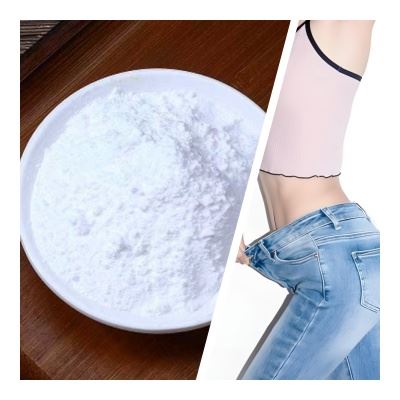
Cetilistat API
Cetilistat (CAS 282526-98-1) is a gastrointestinal lipase inhibitor engineered for metabolic health formulations and clinical-stage weight management therapeutics. Manufactured via validated synthetic routes, this active pharmaceutical ingredient exhibits high selectivity toward pancreatic and gastric lipases, reducing dietary fat absorption without systemic central nervous system activity. Production operations adhere strictly to ICH Q7 cGMP guidelines, ensuring consistent physicochemical properties and trace-impurity control tailored for commercial pharmaceutical manufacturing.
Product Identification
|
Parameter |
Detail |
|
INN |
Cetilistat |
|
CAS Number |
282526-98-1 |
|
Molecular Formula |
C25H39NO3 |
|
Molecular Weight |
401.59 g/mol |
|
Structure |
Benzoxazinone derivative |
Key Specifications
|
Test Parameter |
Specification Standard |
|
Assay (HPLC) |
99.0% to 101.0% (anhydrous) |
|
Appearance |
White to off-white crystalline powder |
|
Melting Point |
60.5°C to 62.5°C |
|
Loss on Drying |
NMT 0.5% |
|
Residue on Ignition |
NMT 0.1% |
|
Heavy Metals |
NMT 10 ppm |
Chemical & Functional Profile
Enzymatic Inhibition: Covalent binding to the active serine residue of pancreatic lipase, blocking triglyceride hydrolysis into absorbable free fatty acids.
Lipophilicity: High partition coefficient (log P) optimized for retention within the gastrointestinal lumen rather than systemic circulation.
Crystalline Stability: Verified stable polymorph via X-ray powder diffraction (XRPD) preventing phase transitions during solid-oral manufacturing.
Thermal Tolerance: Retains chemical integrity under standard granulation and roller compaction temperatures up to 50°C.
Technical Focus
Stereochemical Purity: Chiral HPLC separation ensuring enantiomeric excess (ee) at least 99.5% to eliminate isomeric accumulation.
Solvent Residuals: Purified exclusively via Class 3 solvents (ethanol and water), maintaining residual thresholds below 500 ppm.
Particle Size Distribution: Jet-milled to achieve D90 under 45 micrometers, enhancing direct compression and content uniformity.
Inhibition Potency: Verified IC50 value against porcine pancreatic lipase at or below 45 nM per batch standard.
Formulation Considerations
Excipient Compatibility: Chemically inert when co-processed with microcrystalline cellulose, lactose monohydrate, and magnesium stearate.
Moisture Sensitivity: Requires processing under controlled low-humidity environments (relative humidity under 40%) during blending and wet granulation.
Dissolution Performance: Immediate-release design achieving over 85% drug release within 30 minutes in simulated intestinal fluid at pH 6.8.
Systemic Profile: Restricted local gastrointestinal activity minimizing plasma accumulation and central nervous system exposure.
Target Applications
Prescription Therapeutics: Active ingredient for oral capsules targeting chronic weight management in obese adult cohorts.
Metabolic Research: Feedstock for clinical trials investigating postprandial lipemia and glycemic control improvements.
Combination Regimens: Raw material for developmental therapies pairing peripheral fat-absorption blockers with metabolic regulators.
Quality Assurance & Testing
Analytical Methods: Validated via HPLC, GC-MS, ICP-MS, and differential scanning calorimetry (DSC).
Impurity Thresholds: Individual unspecified impurities under 0.05%; total impurities under 0.2% per ICH Q3A guidelines.
Microbial Limits: Total aerobic microbial count under 100 CFU per gram; absence of pathogens per batch release.
Traceability: Full chain-of-custody documentation covering raw material origin, intermediates, and final packaging logs.
Storage Protocol
Temperature Control: Maintain in a monitored cold storage zone between 2°C and 8°C.
Atmospheric Sealing: Packaged in double-layer food-grade low-density polyethylene bags under dry nitrogen blanket inside a rigid fiber drum.
Light Protection: Stored protected from direct ultraviolet radiation and high ambient moisture.
Shelf Life Verification: Validated for 24 months from manufacture date in original unopened containers.
Regulatory & Technical Documentation Support
Certificates of Analysis (COA): Comprehensive analytical validation covering registration, pilot, and commercial production batches.
Safety Data Sheets (MSDS): Hazard safety documentation fully compliant with current GHS international standards.
Core Technical Files: Complete technical data sheets, analytical validation methods, and verified synthesis routes.
Regulatory Declarations: Certified statements covering BSE and TSE absence, non-GMO status, and allergen compliance.
DMF and CEP Support: Technical coordination for active Drug Master Files and Certificates of Suitability aligned with global regulatory authorities.
Packaging & Logistics
Primary Container: Inner double-tied food-grade polyethylene bags hermetically sealed against moisture ingress.
Secondary Container: Tamper-evident fiber drum equipped with moisture barrier desiccant inserts.
Commercial Units: Configured in 1 kg, 5 kg, and 25 kg net weight tiers.
Freight Monitoring: Shipped via temperature-validated cold-chain carriers featuring continuous data loggers.
Frequently Asked Questions
Q: What synthetic approach is utilized for this API?
A: Production relies on stereoselective organic synthesis followed by multi-stage fractional crystallization.
Q: Is a DMF accessible for regulatory review?
A: Yes, active DMF reference is granted upon receipt of a valid Letter of Access authorization.
Q: What is the standard evaluation sample quantity?
A: Evaluation quantities begin at 100 grams, with commercial scaling from 25 kg batches upward.
Q: Are animal-derived reagents involved in synthesis?
A: No, the chemical synthesis pathway is entirely synthetic with no animal-derived raw materials.
Q: How is particle size consistency verified per batch?
A: In-line laser diffraction particle sizing is integrated into the final micronization stage to confirm D90 thresholds.
Hot Tags: cetilistat, China cetilistat manufacturers, suppliers, factory, CAS 106650 56 0, CAS 77 09 8, Cetilistat Building Block, female weight loss raw materials, GLP 1 Protected Peptide Fragment, Sibutramine Hydrochloride Raw Material


