


Product details and parameters
Chinese name: L-carnitine
Foreign name: L-Carnitine; L-CN; (R)-3-Carboxy-2-hydroxy-N,N,N-trimethyl-1-propanaminium innersalt
Alias: L-carnitine; L-carnitine; Vitamin BT; L-carnitine; L - β - hydroxy - γ - trimethylammonium butyric acid, (R) -3-carboxy-2-hydroxy-N, N, N-trimethylammonium salt
Chemical formula: C7H15NO3
Molecular weight: 161.20 (based on 2011 international relative atomic mass)
CAS login number: 541-15-1
EINECS login number: 208-768-0
Melting point: 197 to 212 ℃
Boiling point: 287.5 ℃
Water solubility: 250 g/100 g
Density: 0.64 g/cm ³
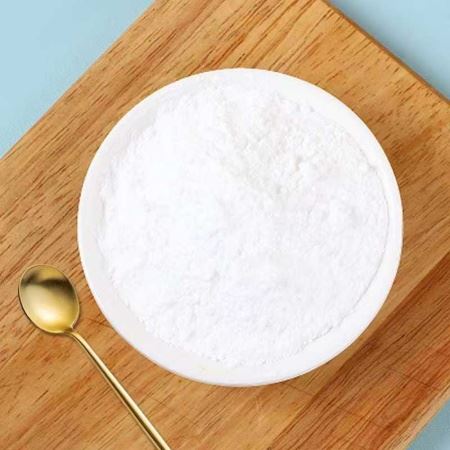
Appearance: White crystalline or crystalline powder with a slight fishy odor
Application: Widely used as a food additive in infant and toddler food, weight loss food, athlete food, nutritional supplements for middle-aged and elderly people, nutritional fortifiers for vegetarians, and animal feed additives
Security Description: S26, S36, S37/39
Hazard symbol: Xi
Hazard description: R36/37/38
Research Brief History
Since 1953, L-carnitine has been listed in the index column of Vitamin BT in the American Chemical Abstracts.
In 1958, Fritz discovered that L-carnitine plays an important role in the oxidation of long-chain fatty acids in heart and muscle tissues, which can increase the rate of β - oxidation metabolism of fat and accelerate the consumption of fat by cells (mitochondria).
In 1973, Engel and Angeliui reported the first case of L-carnitine deficiency and treated it with carnitine [13]. Subsequently, several clinical syndromes related to carnitine deficiency and primary carnitine deficiency inherited from autosomal recessive genes were reported, including systemic carnitine deficiency (SCD) and myopathic carnitine deficiency (MCD).
In the 1980s, L-carnitine was marketed as a commodity abroad and included in the 22nd edition of the United States Pharmacopeia.
In 1980, Rebouche and Engel first elucidated the mechanism and process of L-carnitine synthesis in organisms, which consists of three steps and six essential factors: L-lysine, methionine, niacin, vitamin C, vitamin B6, iron, etc. Among them, L-lysine is the skeleton for the synthesis of L-carnitine.
In 1985, the International Conference on Nutrition held in Chicago classified L-carnitine as an essential nutrient for specific conditions. 22 countries and regions in the world have allowed the addition of L-carnitine to infant formula to prevent carnitine deficiency.
In December 1988, France allowed L-carnitine to be used as a nutritional fortifier in infant and regular foods.
On January 6, 1989, the French government reiterated its 1988 opinion that L-carnitine is a multi-purpose nutrient, and 100 mg of carnitine can be added for every 1000 calories.
On September 14, 1990, the Swiss government set the maximum oral limit of L-carnitine at 600 mg/d.
On March 24, 1993, the US Expert Review Committee assessed L-carnitine and its salts as safe nutritional supplements for adults at a daily dose of 20 mg per kilogram of body weight. Exceeding this dosage may cause gastrointestinal discomfort.
On May 13, 1993, the US FDA ruled that right-handed and mixed rotation carnitine were not considered GRAS substances and banned their sale [37], with right-handed carnitine being a competitive inhibitor.
In 1995, the European Union approved the use of L-carnitine in various animal feed sources.
In 1996, the 16th National Technical Committee for Standardization of Food Additives in China approved the use of L-carnitine in beverages, dairy beverages, biscuits, solid beverages, and milk powder.
In March 2000, the "Enzymatic Production of L-carnitine", a national key scientific and technological research project undertaken by the School of Bioengineering at Jiangnan University in China, passed the national acceptance inspection.
In 2003, L-carnitine was recognized by the International Obesity Health Organization as the safest and side effect free weight loss nutritional supplement
Physicochemical properties
The appearance is white crystalline lens or white transparent fine powder, with a slight special fishy smell. Highly soluble in water, ethanol, and methanol, slightly soluble in acetone, insoluble in ether, benzene, chloroform, and ethyl acetate. Highly hygroscopic, exposed to air can deliquesce or even liquefy. It can be placed in a solution with a pH value of 3-6 for more than 1 year and can withstand high temperatures above 200 ℃. Its combination bonds and binding groups have good solubility and water absorption.
Specific rotation: -30 ± 1 ° (concentration: 1.0 g/100 mL); Solvent: water; Wavelength of light: 589.3 nm; Temperature: 23 ℃)
Heat of combustion (KJ/mol): 39.8
Logarithmic value of oil-water (octanol/water) partition coefficient: 4.47
physiological function
L-carnitine is widely present in nature, with high levels of carnitine in muscle tissue. Animal experiments have found that the concentration of L-carnitine in the adrenal gland is the highest, followed by the heart, bones, muscles, adipose tissue, and liver. Free L-carnitine is excreted through urine. The human body requires carnitine through dietary intake and/or endogenous synthesis. The human liver and kidneys use lysine and methionine as raw materials to synthesize carnitine, while also requiring the assistance of VC, niacin, VB6, and iron. VC is essential for the biosynthesis of carnitine, and among all nutritional cofactors, VC has the greatest impact on the rate of carnitine biosynthesis. There is experimental evidence that the biosynthesis rate of carnitine in the kidneys of vitamin deficient guinea pigs is reduced by 8-10 times, and the heart and skeletal muscles are particularly sensitive to this. The concentration of carnitine in the tissues of animals lacking VC decreased by 50%. Iron is also required in the response that requires VC, and the concentration of carnitine in the liver and heart tissues of pregnant mice with iron deficiency is significantly reduced.
Application areas
In the 1970s, there were reports of using carnitine to treat obesity and lose weight. L-carnitine is an excellent weight loss active substance and a normal component of the diet. Its main function is to help long-chain fatty acids undergo beta oxidation, which is beneficial for the body's utilization of fat, including burning excess fat for energy without any side effects. At the same time, attention should be paid to strengthening exercise to consume the accumulated fat in the body and achieve weight loss. It belongs to a weight loss method that does not require dieting, anorexia, fatigue, or diarrhea. The relevant experimental results showed that, while maintaining their original lifestyle and dietary habits, taking L-carnitine continuously according to the prescribed dosage of health products for 35 days, the subjects' weight, waist circumference, hip circumference, total body fat, and subcutaneous fat thickness at various points all decreased. After the experiment, the subjects' exercise endurance did not decrease, and there were no abnormalities in various clinical symptom indicators before and after the experiment.
Hot Tags: l-carnitine raw material, China l-carnitine raw material manufacturers, suppliers, factory, CAS 106650 56 0, female weight loss raw materials, High Purity Sibutramine Powder, phenolphthalein laboratory reagent, Phenolphthalein powder, phenolphthalein pure powder


