


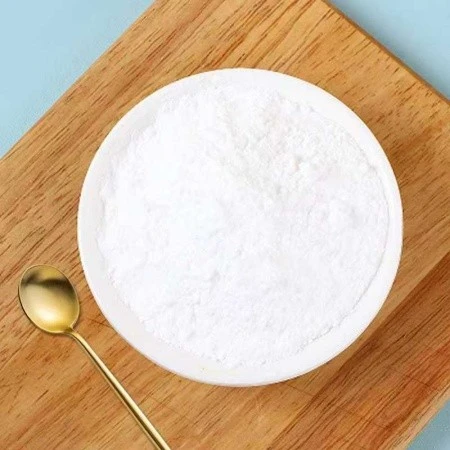
L-Carnitine Tartrate (USP/EP Grade)
L-Carnitine Tartrate is a stable, non-hygroscopic crystalline salt synthesized from pure L-carnitine and L-tartaric acid in a 2:1 molar ratio, optimized for immediate gastric dissociation, high-speed capsule filling, and solid-dose nutraceutical formulations.
Key Technical Specifications
|
Parameter |
Specification Standard |
Analytical Method |
|
Assay (Dried Basis) |
98.0% to 101.0% |
Titration |
|
L-Carnitine Content |
68.0% to 72.0% |
HPLC |
|
L-Tartaric Acid |
28.0% to 32.0% |
HPLC |
|
Optical Rotation |
-9.5° to -11.5° (c=1, H2O) |
Polarimetry |
|
Loss on Drying |
≤ 0.5% (105°C, 3h) |
Gravimetric |
|
Residue on Ignition |
≤ 0.4% |
Gravimetric |
|
Heavy Metals (as Pb) |
≤ 10 ppm |
ICP-MS |
|
Lead (Pb) |
≤ 0.5 ppm |
ICP-MS |
|
Arsenic (As) |
≤ 0.1 ppm |
ICP-MS |
|
Total Aerobic Count |
< 1000 CFU/g |
Plate Count |
|
Yeast and Mold |
< 100 CFU/g |
Plate Count |
|
Pathogens |
Absent in 10 g |
PCR / Immunoassay |
Chemical & Functional Profile
Molecular Data: Molecular formula C13H27NO9; CAS Registry Number 36687-82-8.
Physical Properties: White odorless crystalline powder, freely soluble in water and methanol, insoluble in non-polar organic solvents.
Metabolic Action: Dissociates rapidly in gastric fluids, releasing free L-carnitine to facilitate long-chain fatty acid transport across mitochondrial membranes via carnitine palmitoyltransferase.
Production & Processing Focus
Moisture Reduction: Processed via closed-loop vacuum drying to maintain residual moisture below 0.5%, preventing premature hydrolytic degradation and caking.
Particle Engineering: Micronized through air-jet milling to achieve 90% passing through an 80-mesh screen, ensuring blend uniformity in direct compression tableting.
Solvent Purity: Synthesized exclusively via aqueous processing routes without chlorinated hydrocarbon catalysts, guaranteeing zero residual Class 1 or Class 2 solvents.
Formulation & Application Guidance
Moisture Management: Requires moisture-impermeable liners and dry-room processing environments (relative humidity below 40%) during capsule filling and tableting operations.
Excipient Compatibility: Compatible with standard direct-compression binders such as microcrystalline cellulose and lubricants like magnesium stearate.
Thermal Tolerance: Withstands standard fluid-bed granulation temperatures up to 60°C without thermal decarboxylation or assay loss.
Target Commercial Applications
Weight Management Capsules: Formulated in hard gelatin and HPMC capsules at 500 mg to 1500 mg active dosages per serving.
Sports Nutrition Powders: Incorporated into dry-blended pre-workout and intra-workout formulations for sustained cellular energy support.
Functional Liquid Drops: Utilized in high-concentration oral delivery systems requiring precise pH buffering and neutral taste profiles.
Quality Assurance & Testing
Chromatographic Purity: Monitored via High-Performance Liquid Chromatography (HPLC) to quantify related organic impurities below 0.1%.
Spectroscopic Fingerprinting: Fourier-Transform Infrared Spectroscopy (FTIR) verification executed on incoming intermediate batches against certified reference standards.
Trace Element Verification: Routine Inductively Coupled Plasma Mass Spectrometry (ICP-MS) screening performed on every production lot for elemental impurity compliance.
Storage Requirements
Container Sealing: Store in double-lined food-grade polyethylene bags secured inside rigid fiber drums or moisture-resistant boxes.
Climate Control: Maintain ambient storage temperatures between 15°C and 25°C with relative humidity strictly controlled below 60%.
Shelf Life: Valid for 36 months from the date of manufacture in unopened, original packaging protected from direct light and volatile substances.
Documentation & Regulatory Support
Lot Documentation: Each commercial shipment includes an official Certificate of Analysis (CoA) detailing exact assay, heavy metal, and microbial metrics.
Compliance Files: Full Material Safety Data Sheets (MSDS), non-GMO verifications, allergen disclosures, and BSE/TSE-free statements available upon request.
Traceability Protocols: Maintained under current Good Manufacturing Practices (cGMP) with forward-and-backward batch tracking records.
Packaging & Logistics
Bulk Packaging: 25 kg net weight packed in dual polyethylene inner bags secured with tamper-evident cable ties inside a sturdy cardboard drum.
Sample Provision: 100 g to 1 kg trial sample containers supplied in heat-sealed aluminum foil pouches for R&D evaluation and pilot testing.
Freight Protection: Palletized, shrink-wrapped, and equipped with active desiccant packs to ensure moisture defense during international ocean and air transport.
Frequently Asked Questions
Q: What is the exact active L-carnitine yield of this salt?
A: The material delivers between 68.0% and 72.0% pure L-carnitine by weight, with the remainder consisting of bound tartaric acid.
Q: Is the particle size distribution suitable for direct compression?
A: Yes, the micronized profile is optimized for direct compression tableting and high-speed capsule filling without requiring wet granulation.
Q: What is the minimum commercial order quantity?
A: Standard commercial supply begins at one pallet unit (250 kg to 500 kg), with smaller quantities available for formulation testing.
Q: Are analytical working standards provided with orders?
A: Representative working standards and corresponding HPLC chromatograms can be supplied for internal laboratory validation upon request.
Hot Tags: l-carnitine tartrate, China l-carnitine tartrate manufacturers, suppliers, factory, Bupropion Pharmaceutical Intermediate, Bupropion Related Compound A, CAS 54 31 9, female weight loss raw materials, phenolphthalein laboratory reagent, phenolphthalein raw material


